
Deckhand is the way most people get into yachting, and it is the one position where nobody expects you to already know the job. That single fact should shape your entire CV, and most people applying get it exactly backwards. They try to sound experienced. What the boat is actually reading for is something else.
I spent thirty years at sea, most of it as ETO on 60 to 90 metre motor yachts, before that offshore. I was never a bosun and deck was never my department, which is precisely why this is worth writing. I watched deckhands arrive and leave for three decades without ever being the one who hired them, so what stayed with me is what a boat notices about someone, not what a crew agency says it wants.
What the job actually is
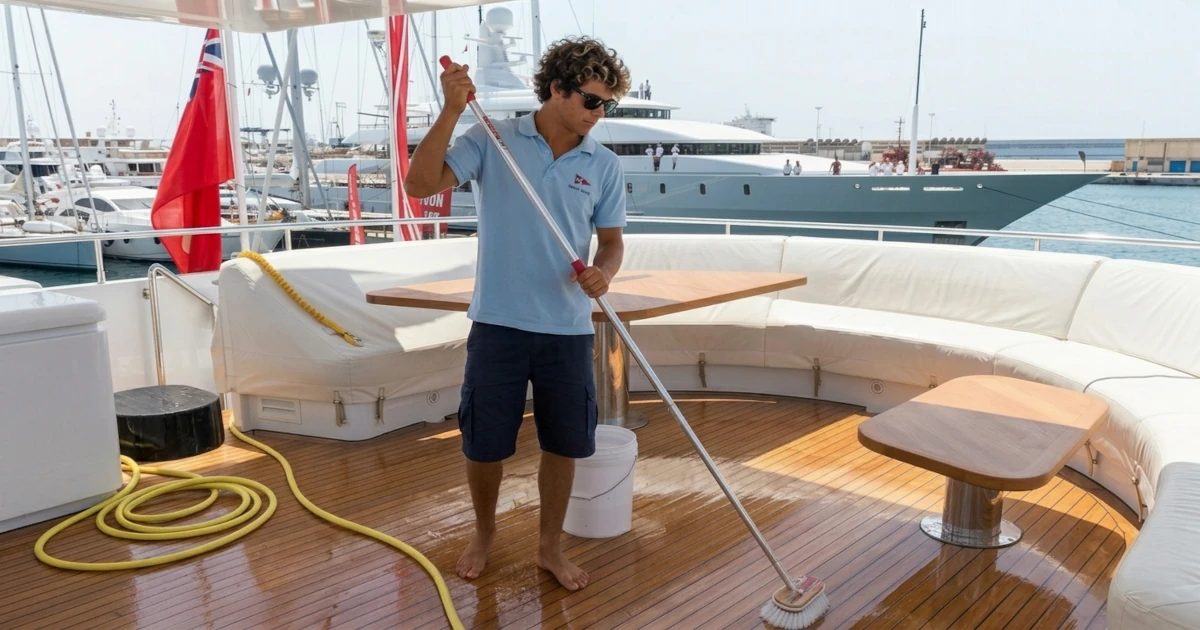
Roughly eighty per cent of the time, there are no guests on board. That period is washing the boat, day and night, and then washing it again. Polishing handrails. Small paint jobs. Carrying things. Sorting out the tenders and the toys. Getting the boat ready for the season, whether that is the Med or the Caribbean.
That is not a warning and it is not a complaint. It is the actual content of the role, and a CV written by someone who understands that reads completely differently from one written by someone who has watched a few videos.
Then the guests arrive
The other twenty per cent is a different job entirely, and this is the part that never shows up properly on a CV.
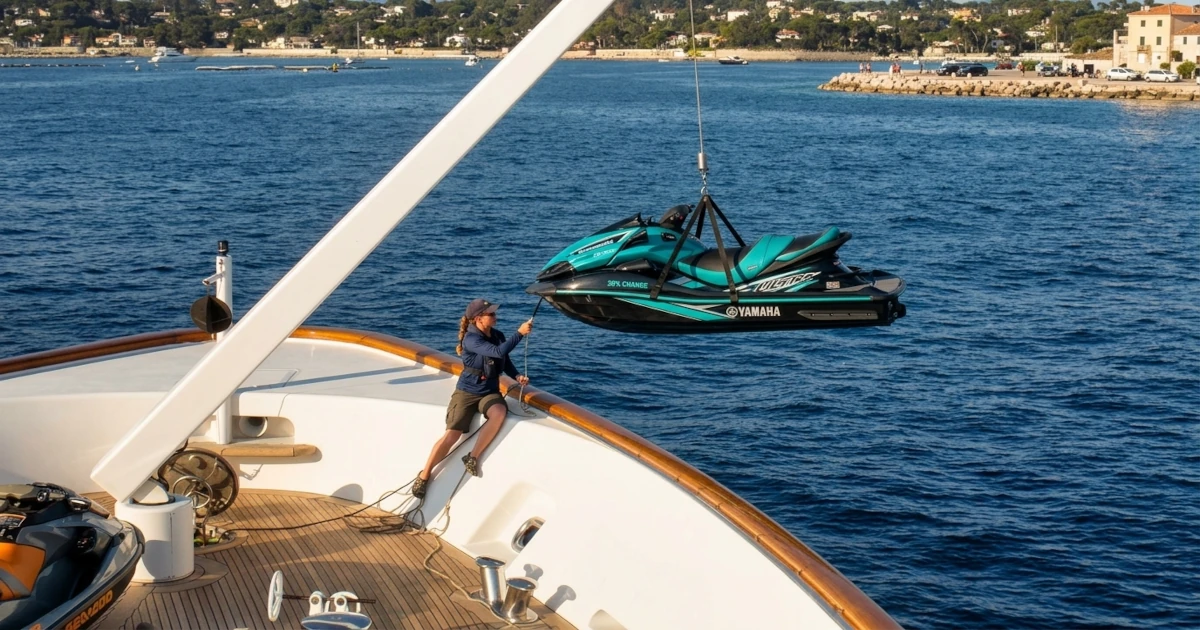
The morning starts in the tender garage. Jet skis out, tenders out, seabobs, inflatable slides and towers for the kids, electric boards with remote controls. All of it comes out, gets laid out on the aft deck, and has to be ready before anyone comes down for breakfast. Then you are on service all day. If a guest has never used a jet ski, you take them out. If the children want driving around, you drive them around. At the end of the day everything goes back into the garage, cleaned and stowed, and tomorrow it comes out again.
Write that on your CV using the actual names of things. Tenders, jet skis, seabobs, inflatables, water toy operation, tender garage launch and recovery. A green applicant writes "assisted guests with water activities" and it tells a bosun nothing. The specific words tell him you have either done it or at least understood what you are applying for.
Who is actually reading your CV
Here is something that surprises people coming from the merchant fleet or from shore. On the cargo ships I started on, the bosun was 55 or 60 years old and the authority came with the age. On yachts he might be 25 with three years behind him.
Progression is fast in a way that does not exist anywhere else at sea. I knew someone who went from bosun to First Officer in six years. On a cargo ship that timeline is not possible, no matter how good you are.
Two things follow from this. The person reading your application may well be younger than you, so a CV written in heavy merchant marine language lands badly. And the entry position you are applying for is genuinely the bottom of a ladder that people climb quickly, which is worth remembering on the days when you are washing the same stretch of deck for the third time.
Nobody expects you to know anything
This is the part to get right, because it decides what belongs on the page.
It is an entry position. No captain and no bosun expects a new deckhand to arrive knowing how to do the work. They expect you to turn up on time, to listen to the bosun or the lead deckhand, and to do what you are given without needing to be asked twice. Conscientious is the whole requirement. Everything else is taught on board.
So stop trying to make your CV sound experienced. It will not survive contact with anyone who has done the job, and the attempt itself is a signal. What you want the page to communicate is that you are someone who shows up and can be relied on. Two years in the same job ashore says that. Any position where you were trusted with keys, money, equipment or other people's children says it. A reference from a former employer who will actually pick up the phone says it loudest of all.
What to put down when you have no sea time
You have no yacht experience. That is expected. The question is what you have instead, and one example has stayed with me for years.
There was a deckhand who was a decent carpenter before he came to yachting. That is all. He was not certified for anything special. But the bosun knew about it, so when there was woodwork to be done on deck the job went to him, and when something needed fixing inside, a drawer or a fitting, he was the one who got sent. Not the real interior work, that goes to outside specialists and it is a different level entirely, touch-ups included. But enough that he was the person who got asked, while others carried on washing.
That is what a practical trade does for you on a yacht. It does not get you hired ahead of anyone. It changes what work you are given once you are on board, and what work you are given is what decides how fast you move.
So go through what you actually know how to do. Carpentry, welding, mechanics, painting, outboard engines, sail rigging, electrical work. Any of it goes on the CV in plain words, with what you actually did. This applies just as much if your trade points somewhere else entirely, since on larger boats the technical departments are their own career path and people do cross over into AV/IT and ETO roles.
A word about scuba, because it comes up constantly. Plenty of deckhands hold a dive instructor qualification, so it is not the differentiator people think it is. List it, but do not build the CV around it, and give it something concrete to stand on. Teaching experience, particularly with children, is worth more on a yacht than the certificate number.
The same goes for anything else you did before. Ski instructor, sailing, working with kids, hospitality, anything customer facing. When guests are on board, half your day is service, and someone who has already worked with the public has an advantage over someone who has not.
The certificates
You need your STCW basic training before anyone can employ you. You need a valid seafarer medical, which most people know as the ENG1, and there is a good chance you do not need the British one specifically.
A powerboat qualification is worth having as a deckhand, since driving tenders is a real part of the job. Beyond that, do not stack up courses hoping they compensate for having no experience. They do not.
If the boat you are chasing does a winter in Florida or the Caribbean, you will need a US B1/B2 visa, and you cannot arrange one before you have the job. It arrives with the boat, not before it.
Put every certificate on the CV with its expiry date visible. A date left off reads as either careless or as something you are hiding, and neither of those is the impression you want from an entry position.
What actually ends a deckhand's season
Not incompetence. Nobody is sent home for being slow at something they were never taught.
What I have seen end it, more than once, is people drinking too much ashore on their time off and causing trouble. There is no discussion when that happens and no second chance. They go home. The boat carries the owner's name and the captain's licence, and neither of those survives crew making a mess in a port where the vessel is known.
That is not something you can write on a CV. It is worth knowing before you get on a plane.
Practical points for the CV itself
Keep it to one page. There is no second page on a deckhand CV and filling one is not a good sign.
Include a normal, current photograph. Yachting expects it, and it is one of the few industries where that is standard rather than a problem.
Put your nationality, your visas and your availability where they can be seen. A bosun with a crossing in three weeks is checking whether you can legally travel before he reads anything else.
Be honest about having no sea time. Write what you have done and let it stand. Someone who reads yacht CVs all season will spot padding immediately, and the applicant who wrote plainly that they have no boat experience but held the same job ashore for two years reads better than the one who dressed up a two week flotilla holiday as sailing experience.
The bottom line
The job is washing, carrying and maintenance most of the time, and guest service with tenders and toys the rest. Nobody expects you to arrive knowing how to do it. They expect you to be on time, to listen, and to do what you are given.
Your CV should say that about you, and then say what practical skill you are bringing that nobody has to teach you. That is the whole task.
dajCV builds a one page yacht CV in the format crew agencies expect, with your certificates, visas and availability laid out where a bosun looks for them first, so the parts that get you the interview are not the parts that get buried.