

An ETO CV is not a list of certificates. It is a piece of evidence that answers one question a chief engineer or captain is asking before they read a single line of your experience: if something electrical fails at two in the morning, three hundred miles offshore, can this person find it and fix it?
Everything on the page either supports that answer or gets in the way of it. The crew who get shortlisted understand this. The ones who don't tend to hand over a generic engineering CV, pad it with soft skills, and wonder why the interview never comes. This guide walks through what belongs on an Electro-Technical Officer CV for yachts, in the order it matters, and the small structural decisions that separate a CV that gets read from one that gets closed after fifteen seconds.
First, know which ETO role you're applying for
This is the part almost no one explains, and it changes how you write the whole CV.
On yachts in the 60 to 90 metre range, the ETO is usually one person doing everything electrical and electronic on board. That means the high and low voltage systems, the switchboards and distribution, the HVAC controls, the navigation and communications electronics, and very often the AV and IT side as well: the guest cabin televisions, the network, the media servers, the Wi-Fi that the owner expects to work exactly like it does at home. On a boat this size, "ETO/AV-IT Officer" is frequently a single job description, and breadth is the selling point. You are the one who covers all of it.
On yachts of 100 metres and above, the picture changes completely. There is enough technology on board that the roles split apart. You get a dedicated ETO for the electrical and high voltage side, a separate AV/IT Officer (sometimes several of each) for the entertainment and network systems, and a Chief ETO running the whole electro-technical team. Here, depth in one area beats breadth. A 110 metre yacht hiring a dedicated ETO wants to see how deep your high voltage and power distribution experience goes, not that you can also set up a smart TV.
The certification bar is higher at this end too. For dedicated ETO roles on large yachts, it is increasingly expected, and often required, that you hold a full STCW III/6 Certificate of Competency. That is the licensed ETO qualification, mandatory on vessels with propulsion power of 750 kW or more, and it carries a lot more weight than a short marine-electrical course. Alongside it, a recognised High Voltage certificate is usually expected. On the biggest boats these are frequently non-negotiable, so if you are aiming at the 100 metre plus market and don't hold them yet, closing that gap is worth doing before you compete for those positions. If you do hold them, make both unmissable on the CV.
So the same experience should be framed differently depending on the boat you are targeting:
- Applying to a 70 metre boat as a solo ETO/AV-IT? Lead with range. Show that you are comfortable moving between the switchboard and the network cabinet in the same afternoon.
- Applying to a 110 metre plus boat as a dedicated ETO? Lead with depth. Put the high voltage work, the power management systems and the planned maintenance you owned up front, and let the AV/IT experience sit underneath as supporting evidence rather than the headline.
If you are genuinely open to both, keep two versions of your CV. Not two different people, just a different emphasis in the summary and a different order to your systems list. That one adjustment tells the reader you understand the role you are applying for, which is already more than most applicants manage.
What a captain looks for first
The first pass over an ETO CV is a filter, not an assessment. Before anyone weighs your experience, they are checking three things, usually in this order.
First, are your certificates current? Not just present, but current, with visible expiry dates. An ETO CV that lists a qualification with no date reads as either careless or evasive, and both cost you the interview. There is more on this below.
Second, is your sea service on comparable vessels? A chief engineer scanning your record wants to know whether the boats you have worked on look anything like the boat you are applying to, in size, in complexity, in the kind of systems on board. Time on a 45 metre sailing yacht and time on a 90 metre tri-deck motor yacht are not the same thing, and the reader needs to see that difference at a glance.
Third, do you have hands-on experience with the systems this particular yacht runs? This is where most CVs fall down, and where the next two sections earn their place.
Certificates, listed in date order
List every relevant certificate with the issuing authority and the expiry date, and put the ones closest to expiring where they can be seen. For an ETO, the reader is typically looking for:
- STCW Basic Safety Training. Mandatory for all crew, no exceptions.
- A recognised seafarer's medical, most commonly the ENG1 issued by an MCA-approved doctor. Without STCW and a valid medical a recruiter cannot place you at all, so these come first.
- Your electro-technical qualification. This is the core of your professional credibility. More and more, especially on larger yachts, the market wants a full STCW III/6 Certificate of Competency, the licensed ETO qualification required on vessels with propulsion power of 750 kW or more, rather than a short marine-electrical course. If you hold III/6, make it prominent. If you hold something lesser, be accurate about what it is.
- A High Voltage (HV) certificate. On yachts running high voltage systems, which now means most large boats, an HV certificate is often expected alongside III/6, and for 100 metre plus dedicated ETO roles it is frequently required.
- Manufacturer or systems-specific training. There is more on naming these below.
A certificate without an expiry date is a red flag. Show the dates and keep them honest. The interview will surface anything you have stretched, and the yacht world is small enough that a reputation for it follows you from boat to boat.
Name your systems, don't describe them
"Familiar with AV/IT systems" tells a chief engineer nothing. It is the single most common weakness on ETO CVs, and fixing it is the fastest way to stand out.
The reader is trying to work out one thing: whether you can step aboard and be useful in week one, or whether they will spend a month teaching you the boat. You prove the first by naming things specifically:
- The switchboard manufacturer and the power management system you worked with.
- The high voltage distribution setup and the voltage levels you are competent on.
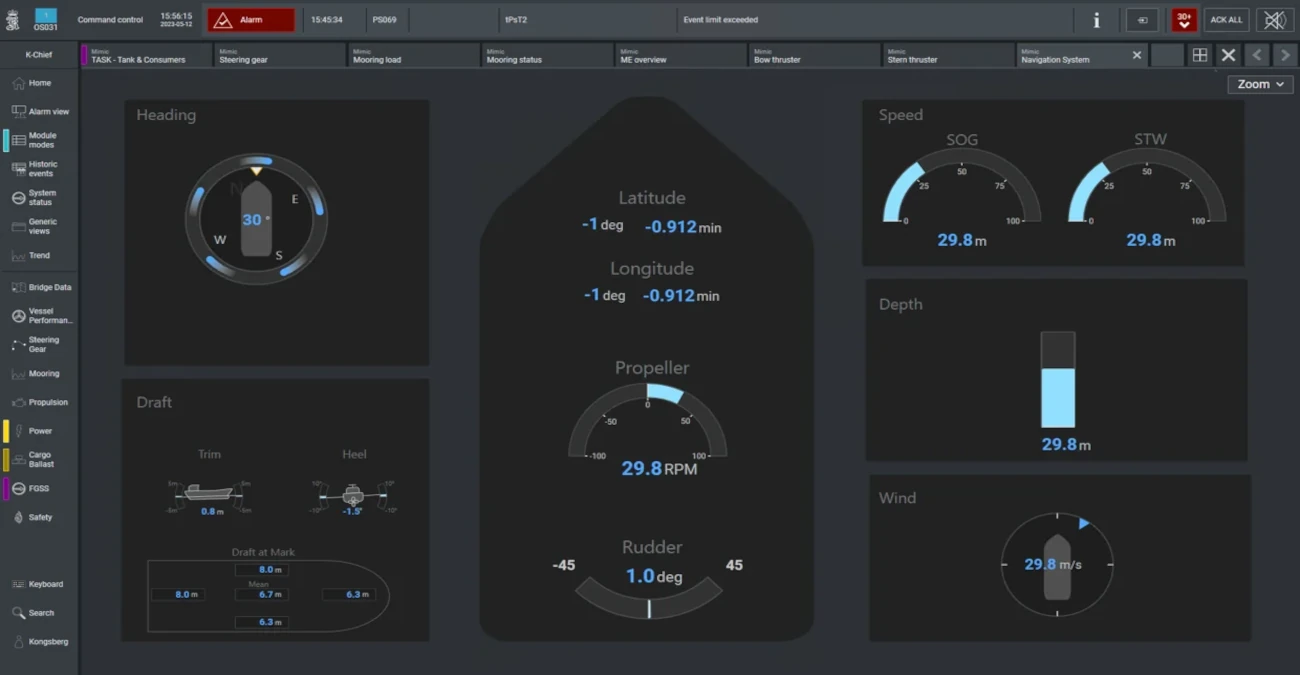
- The integration and automation platform running the boat's systems.
- The navigation and communications suite on the bridge.
- The AV and network hardware, meaning the control system, the media distribution and the network vendor, if AV/IT is part of your job.
A named system is a claim the reader can check and relate to their own boat. A vague adjective is a claim they have to take on faith, and they won't. If you worked on a particular refit or a systems upgrade, say what it was and what you did. "Led the HV switchboard replacement during the 2022 refit" is worth ten lines of general responsibilities.
Structuring the sea service section
Sea service is the part most crew get wrong, and for a technical role it matters more than almost anything else on the page.
Every vessel entry needs to be laid out the same way, so the reader can compare your record against their boat without doing arithmetic in their head. For each vessel, show the length, the type, the flag, the itinerary or cruising area, and the dates. Presented consistently, this lets a chief engineer run their eye down the list and see straight away whether you have worked at the scale and complexity they need.
This is exactly the part a purpose-built yacht CV tool should structure for you: a proper sea-service table with vessel, type, size, position and period, instead of a paragraph of prose that makes the reader hunt for the numbers.
Longevity: what a chief engineer reads between the lines
There is one pattern a chief engineer looks for in your sea service that has nothing to do with systems or certificates, and it quietly makes or breaks a lot of applications. It is how long you stay.
A record that shows you settle on a boat and stay, ideally a year or more per vessel, tells the reader you are stable, that you fit into a crew, and that they won't be recruiting your replacement three months after you join. That counts for a great deal on a boat where the whole team lives together in a confined space for a season. A chief engineer will often take a slightly less experienced ETO who stays over a brilliant one who is gone the moment a better offer appears.
The opposite pattern, a new boat every two or three months year after year, reads as a warning no matter how good the technical experience looks. Fairly or not, a CV full of very short stints tends to drift to the bottom of the pile. Moving on for a better package is entirely your right, and sometimes a short contract really is just a short contract. But know how the pattern reads. If you have short stints, account for them. A rotational contract, a delivery, a refit period, a yard that changed hands: a single line explaining a short entry stops the reader assuming the worst.
If your record does show real longevity, don't let it get buried. Make the dates easy to read and let the reader see at a glance that you are someone who commits to a boat.
If you're coming into yachting from another industry
A lot of the best ETOs on yachts did not start on yachts. They came out of the offshore and marine world, from pipelay vessels, oil rigs, commercial shipping, industrial electrical and electronics work, and that background is an asset. It is not something to apologise for or hide.
The instinct is often to play down non-yacht experience, as if only time on yachts counts. That is a mistake. An electrician who has kept high voltage systems running on an offshore installation, or maintained electronics on a pipelay vessel where failure was never an option, brings exactly the kind of composure a chief engineer wants. The systems carry different names, but the discipline is the same one that matters on a yacht: planned maintenance, fault-finding, working unsupervised, and owning something that absolutely cannot be allowed to fail. That transfers directly.
The trick is in the framing. Don't present offshore work as a separate career that ended when yachting began. Present it as the foundation the yacht experience is built on: the years that taught you power distribution, fault diagnosis, and how to stay calm when a critical system goes down with no help within reach. Then join it up to the yacht work explicitly. A reader who sees "industrial HV and electronics background, moved into yachts" understands they are getting someone with more depth than a crew member who only ever knew boats.
Common mistakes to avoid
- Leading with a paragraph of personal qualities instead of technical capability. Save the "hardworking team player" line. The reader wants to know what you can fix first.
- Listing every certificate you have ever earned, expired or irrelevant ones included, with no dates. It buries the important ones and reads as padding.
- Describing responsibilities in vague terms instead of naming the systems and equipment you actually worked on.
- Ignoring the size of the target boat and sending the same CV to a 60 metre and a 120 metre. The role is genuinely different, so your emphasis should be too.
- Running to three pages. Two is the ceiling for a yacht CV, and one well-structured page is often stronger.
- A photo that undercuts the professional impression. No sunglasses, no cap, no selfies. A clean, friendly headshot in a plain polo does the job.
Before you send it
Read your finished CV as if you were the one doing the hiring. If you cannot answer "what can this person fix at two in the morning in the Caribbean" within thirty seconds of reading it, the CV is not finished. Go back and make the technical evidence sharper, the systems more specific and the sea service easier to scan.
An ETO CV that does this well does more than list what you have done. It gives a chief engineer the confidence to hand you the keys to the boat's electrical systems, which is, in the end, the only thing the CV is really for.